Showing posts with label biology. Show all posts

Thursday, April 22, 2010

Digestion - Alimentary Canal

Hey Sup People! How are you doing this afternoon? Hope you are doing gggggggggrrrrrrrreeeeeeeaaaatttt! (GREAT)

Okay, enough of the introduction :) So today's topic is also about Digestion, but we're moving on to another topic, the Alimentary Canal. I know you must be thinking: "Hey we've learnt this before! Why are we learning this again?" Yes I know that question very well, but here, we're going in dept about all the organs, and stuffs.

So let me list out the enzymes the substrates, and the end product.

Carbohydrate

Starch ( Salivary Amylase) Maltose
Maltose (Maltase)             Glucose

Protein

Protein          (Pepsin)               Polypeptides
Polypeptides (Erepsin/Trypsin) Amino Acids

Fats

Fats      (Bile)     Emulsified Fats
E. Fats (Lipase) 3 Fatty acids + 1 Glycerol

Okay, so now you've seen all the reactions, let's get down to all the organs in the alimentary canal, and their functions. Please get your paper and pens/pencils ready, for the next few paragraphs would be a rollercoaster ride. (0_0 That's exaggerating)

Mouth

  • Contains teeth that chews food molecules into smaller food substances so that it would have a larger surface area for more enzymes to act on it
  • In here, starch is digested by the salivary amylase to form maltose
  • The saliva secreted by the salivary glands produces the enzyme, and it also softens, and mixes the food
  • The tongue rolls the partially digested food into a bolus before it is being swallowed down.

Oesophagus

  • It is also known as the gullet, but at this level, it should be called the oesophagus
  • No digestion takes place here
  • There are 2 muscle that aids in Peristalsis (The next point) - the longitudinal muslce, and the circular muscle
  • Peristalsis - The rhythemic wave-like contraction of muscles that propels and mixes the contents of the alimentary canal forward

Stomach

  • The stomach is an elastic, muscular bag with thick elastic walls.
  • It secretes a mixture of gastric juice - hydrochloric juice, pepsin, and rennin
  • The stomach contracts and relaxes so that the foods are well mixed with the gastric juices
  • In here, protein is being digested in polypeptides by the enzyme pepsin
  • The end product is a semi-liquid product called chyme, that is being released into the duodenum, the first part fo the small intestine.
  • The interesting thing about a stomach is that it is the only organ which has a pH value of 2 (refer to the previous post about pH values)

Liver, Gall Bladder, Pancreas 

Wednesday, April 21, 2010

Digestion - Enzymes

Hey's People, I'm back after a break, if you can see the timing. But anyways, here's the 2nd part of the mighty digestion! (Y) The.....*Drum Roll Please*.....Enzymes! (Y)

Anyway, Enzymes are really simple to understand, but you have to remember a lot of things, but if you write it all out on 1 piece of foolscap paper, I guess you'll remember it better, by a lot, so anyways, good luck!

So Here's the Definition of enzymes.


Enzymes are Proteins. (Please remember that) They are biological catalysts that help speed up the rate of chemical reactions without themselves being broken down at the end of the reaction. (How cool is that?)

Enzymes - Conditions

Yes, there are conditions, like the T&Cs that we humans have. There are 2 main conditions for the best enzymes reactions, and I think you'll find it easy to remember. :)

1. Optimum Temperature


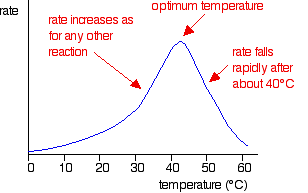
It basically means the temperature at which the enzymes works best in, which is room temperature of about 37 degrees or so (plus minus) and some questions usually states 40 degrees, which is also considered. At this temperature - room temperature - the enzymes reactions with the substrate is at it's peak, but after that temperature, the enzymes would slowly denature, meaning that the reactions would become slowly, and the enzymes would slowly die.

However do please take note that in scientific terms, the enzymes do not die but denature.

2. pH Values

Sorry to say that we have not learnt Chemistry as we would be learning it the next term, but I guess it is just the acidity and the alkaline, and in this case, it is the pH values of the enzymes.

salivary amlase works best in pH7
protease works best in pH2
lipase works best in pH 7~8

Digestion - nutrients

Heys People! I know I'm posting at such a late date, but at least I posted....right? Anyways, here is what I think is the summary of digestion. I've summarised the points I think is required for the exam, as well as adding in several other informations I think it would be fun to know, maybe. But anyways, here it is!

Digestion is basically just the breaking down of large, insoluble, indiffusible food substances into smaller, soluble, and diffusible food substances.

Easy to remember...right? Yeahs.

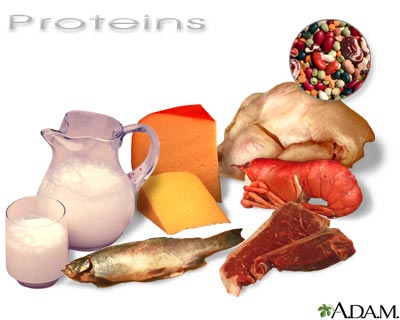
So anyways, there are 3 types of nutrients in total - carbohydrates, proteins, and fats.

Carbohydrates:

It provides energy for the body cells.

There are 3 types of carbohydrates, mainly the diasaccharides, monosaccharides, and the polysaccharides. I would not go into detail for that as you people have to study!!!

So anyways, there are 2 type of tests for carbohydrates, the Benedicts Test and the Iodine Test.

It is made up of Carbon, Hydrogen, and Oxygen (CHO)


Benedicts Test:

It tests for reducing sugar, and if reducing sugar is present, the solution would become reddish (is there even such a word?) -orange precipitate. If not, it would just remain as blue.

Iodine Test

It tests for, as you all should know, for starch. So, if starch is present, the solution would turn blue-black, or if starch is not present, then the solution would remain brown/yellow, depending on the colour of the iodine at first. But I guess it would be better if you choose brown instead, to you know, just to play safe XD

Protein:

It is the main substance used for the growth of new cells, and the repair of damaged cells. It also provides energy when the body lacks fats, or carbohydrates.

It is made up of Carbon, Hydrogen, Oxygen, and Nitrogen.

Protein can never never be stored as it is TOXIC!!!! Thus, it is removed by the body via egestion, as urea in urine.

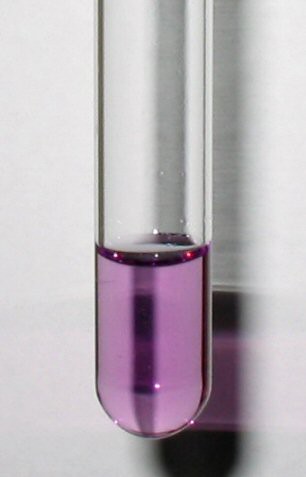
Biuret's Test

The biuret test is used to test for the presence of protein. If protein is present, the solution would change to violet (yeah!!! 0_0). If not, it wouls remain as blue.

Wednesday, March 24, 2010

Raw or cooked food?

So I'm back, finally I guess, from the terrible terrible 1 week holiday. Anyway, let's get back to the topic on hand. Oh, and 1 more thing, welcome to the era of Biology! .......


You know, I love sashimi so this would be quite an interesting topic to research on. Maybe if the results shows that raw food digest slower, I would consider going all cooked food. -_____-"'


According to a certain website, it states that raw food does not digest as easy as cooked food, thus if you want to feel full, do eat more cooked food, unless you're somehow on a diet.

It is believed that your body's own elimination system can eliminate all or most of the toxins in the cooked portion of your diet when eating more raw food. When you eat more cooked food you are eating toxins faster than your body can get rid of them so they back up causing disease.

While searching, I came across this websites that answers the second question- Should we eat raw food or cooked food?


Raw foods are rich in enzymes. Enzymes are needed for the digestive system to work. They are necessary to break down food particles so they can be utilized for energy. The human body makes approximately 22 different digestive enzymes which are capable of digesting carbohydrates, protein and fats. Raw vegetables and raw fruit are rich sources of enzymes.


Lack of digestive enzymes can be a factor in food allergies. Symptoms of digestive enzymes depletion are bloating, belching, gas, bowel disorders, abdominal cramping, heartburn and food allergies.


All of us loose our ability to produce concentrated digestive enzymes as we grow older. In cases where age is a factor, or where lack of digestive enzymes causes food allergies, supplementation may be helpful.

The more food that you can eat raw, the better.


If you do cook your food, the best way to cook food is to lightly steam, stew, or use a slow crock cooker. Eat as few over-processed and over-cooked foods as possible. The body has a difficult time digesting fried, pasteurized, barbecued, dried, and other over-processed and over-cooked foods which you find in boxed and processed foods.

Cooked food undergoes cooking (that's why it's called cooked food duhh..) and it uses heat. Enzymes are then destroyed in heat and it chemically changes foods from the substances needed for health into free-radicals and poisons that destroy our health!


. Enzymes are importanttt...

Therefore, the author of this blog strongly recommends raw food. Ye-ah. I love (L) raw food!

Monday, August 3, 2009

flowers + panadole

well hello and hi again.
i am back.
cut to the point. today, this post is about panadole and flowers.

if you are still able to remember about ms deepa talking about the flowers and what happens when panadole is dropped into it? yeah this is what this post is about.

my mother bought some lilies a few days ago (weeks would be better) and instead of putting panadole, she placed fever medicine and i do not think it really worked as the petals turned brown/black even before they even open. so i guess it does not really work that well.

my mother guessed that the lilies are from a different breed and thus, the result is like that.

DONT KNOW.

I guess there is something wrong with my computer and i cannot upload the pictures i took but i took this form the internet it is something like this but imagine it brown.sorry.

the flowers are more like the bottem left but brown.

Thursday, July 2, 2009

respiration

respiration involves a chemical reaction.
the process of respiration is

glucose + oxygen -> carbon dioxide + energy + water

glucose -> from food
oxygen -> inhale
carbon dioxide + energy + water -> exhale

respiration happens in the mitochondrion
(my-to-con-dria)

animals that contains chloroplast.

it seems that slugs have chloroplast in their body. they do not make their own food but they still eat. as to how they get the chloroplast in their body, the slugs feed on algea which chloroplast are derived. sea slugs are also included.

are viruses / bacteria cells?

this post is on bacteria. the other one was on viruses.

bacteria on the other hand is a single-celled organism.

a group of bacteria contains chlorophyll and use the process of photosynthesis to make their own food.
some bacteria are aerobic, meaning that they require oxygen in order to
survive.
Other bacteria are anaerobes, meaning that they do not require oxygen to survive.

Bacteria that are parasites live inside man, animals, and some plants causing diseases.
Symptoms for disease caused by the toxins that bacteria produce inside the cells.

Bacteria is moved by air and water currents, and on any surface such as clothing, hands, or any object.
They move themselves by using thin hair-like structures called flagella or by wriggling if they do not have a flagella.

There are three ways to identify bacteria; gram stain, respiration, and shape.
Most bacteria reproduce asexually. That means that new cells are formed during single cell division. Some bacteria can only reproduce sexually, with a male and female bacteria.

Bacteria are decomposers, they break down the chemical elements inside other living or dead organisms.


bacteria growth. cannot find something else other than bacteria growth.


http://library.thinkquest.org/CR0212089/bac.htm

are bacteria / viruses cells?

the answer is...
nope

Because viruses are non-living things and so they do not need for food like living things. They are just light particles that float around the air and they cannot be seen by the naked eye and they can be passed on to other organism if touched. They attack healthy cells in living things. Viruses do not have an organized cell structure.They do not have characteristics of living things and thus, cannot metabolize food.

To metabolize means to change food energy into chemical energy that the body can use.

The virus injects its own DNA structure into healthy cells where new virus cells grow.

note that i am talking about viruses instead of bacteria.

Viruses that are mature have characteristics that help to identify them.

Viruses can not reproduce by themselves like bacteria or cells. They must attach themselves to the cell membrane of animals / cell wall of plants and inject a part of their DNA into the cells of the host organism.They do this by using a hollow tube structure to puncture the cell wall/membrane and pass its DNA into the cell. New virus cells are incubated inside the invaded cell. Once the virus DNA reproduces itself inside the cell, it uses the natural process of osmosis to leave the cell. These new virus cells would then attach and infect other healthy cells


just another video showing how viruses spread but this is the
Influenza Type-A Virus


http://library.thinkquest.org/CR0212089/virus.htm

biology

ok, i should have introduced biology on the first day of biology class.
anyway, i don't think anyone would be reading because we have a project on hand and the 10% is not this but
the project but i just post it for the fun of it but that would officially start on the next post later on in the day which is later.