Showing posts with label physics. Show all posts

Saturday, February 27, 2010

refraction


Refraction is here to be with his buddy! Anyway, let me start.


Refraction has lots to remember as compared to reflection.

This illustration basically means:

•The ray of light which travels through the incident, or first, medium and strikes the boundary, or interface, is called the incident ray.


•The ray of light which travels into the refracted, or second, medium and leaves the interface is called the reflected ray.

•A line perpendicular to the surface is imagined at the point of refraction. This line is called a normal. In this context the word normal means perpendicular. In the above diagram the normal is colored blue.

•The angle between the incident ray and the normal is called the angle of incidence, or the incident angle.

•The angle between the refracted ray and the normal is called the angle of refraction, or the refracted angle.
 

This picture means that the ray would bend towards the normal when it is travelling in a denser medium.


This picture means that the ray bends away from the normal when it is travelling in a less dense material.

reflection

Stella's back for more, this time with reflection! It's buddy, refraction, will be accompaning him later on, on the next post.


This picture says it all, right?

It basically means this

•The ray of light which strikes the surface is called the incident ray.


•The ray of light which leaves the surface is called the reflected ray.

•A line perpendicular to the surface is imagined at the point of reflection. This line is called a normal. In this context the word normal means perpendicular.

•The angle between the incident ray and the normal is called the angle of incidence, or the incident angle.

•The angle between the reflected ray and the normal is called the angle of reflection, or the reflected angle.

Notice that the angle of incidence is = to the angle of reflection.

There is this website - click here - that shows how a light beam reflects at the surface of a flat mirror. It is an animation. Simple, but it may explain it to you. Scroll down the website and you'll see the animation.
 
Have fun!

rainbows

I know I am late for this post since this topic was ages, ago, so I was thinking why not a recap! It won't hurt, would it?


Rainbows are one of the most spectacular light shows observed on earth. Indeed the traditional rainbow is sunlight spread out into its spectrum of colors and diverted to the eye of the observer by water droplets.


Most people have never noticed that the sun is always behind you when you face a rainbow. I understand it is funny but it is true.


The traditional description of the rainbow is that it is made up of seven colors - red, orange, yellow, green, blue, indigo, and violet. Actually, the rainbow is a whole continuum of colors from red to violet and even beyond the colors that the eye can see. Thank God we only have to learn the 7 colours. :D

The colors of the rainbow arise from two basic facts:


  • Sunlight is made up of the whole range of colors that the eye can detect. The range of sunlight colors, when combined, looks white to the eye. This property of sunlight was first demonstrated by Sir Isaac Newton in 1666.


  • Light of different colors is refracted by different amounts when it passes from one medium (air, for example) into another (water or glass, for example).


  • There are certain times when you actually see 2 rainbows. Magnificent huh?


    However, not all of the energy of the ray escapes the raindrop after it is reflected once. A part of the ray is reflected again and travels along inside the drop to emerge from the drop. The rainbow we normally see is called the primary rainbow; the second rainbow is called the secondary rainbow.

    Another interesting fact!


    Rainbows are usually present during full moon, at night of course, called the lunar rainbow!

    A full moon is bright enough to have its light refracted by raindrops just as is the case for the sun. Moonlight is much fainter, of course, so the lunar rainbow is not nearly as bright as one produced by sunlight.

    More about rainbows - click here!

    Friday, February 26, 2010

    Heat and its Effects

    Heat changes the size of a substance.

    Heat - substance expands
    Cool - Substance contracts

    Solids
    Examples: Metal ring and ball

    Liquids
    Examples: Glass flask containing coloured water
    - Hot water
       + Liquid level rise
    - Cold water
       + Liquid level drop

    Gas
    Examples: empty flask containg air and a drop of coloured water
    - Hot hands/water
       + Coloured waster rises
    - Iced water
       + Coloured water dropped

    Problems

    Problem
    - Cause pavements to crack/ tiles pop out
    Solution
    - Expansion gap

    Problem
    It's the closest I can get
    - Railway tracks wrap
    Solution
    - Gaps in between tracks

    Problem
    - Bridges expand, and may be at risk of damage
    Solution
    - Expansion gaps or resting on rollers

    Problem
    - Expansion of water pipes/ oil pipelines, causing them to burst
    Solution
    - Expansion bends

    Problem
    - Telephone wires/ cable contract in cold weather, and become taut, any may snap
    Solution
    - Wires are strung loosely

    Uses of expansion
    Riverts
    - Join steel plates and girders
    - Bimetallic strip
      + Thermostat
      + Thermometer

    Click here for websites more about it.

    Wednesday, February 17, 2010

    real & virtual images

    Frankly speaking, I am confused about what is real image and what is virtual image.
    So, I have conducted a research on it, hoping that both you and I would understand it.

    Real and Virtual Images


    Mirrors work by changing the direction that light is moving. In a concave mirror, the light gets reflected towards the center. In a convex mirror, the light moves away. To make an image, we can trace a few rays that the light makes and see what happens to them.


    Let’s start with a concave mirror. If the object is far away, the light rays come in, and then bounce and come back together. See the picture below. This is an example of a real image.


    If the object is very close to the concave mirror or you use a convex mirror, the light doesn’t come back together. However, if you look at the light that comes off of the mirror and trace it back while pretending the mirror isn’t there, they will come back to a point. This is called a virtual image.


    I hope it helps, but it apparantly does not help me. D:

    Tuesday, February 16, 2010

    electricity

    Old Video and a little "chim".
    And a little bit, okay, maybe a lot of chemistry - atoms protons, neutrons.


    Reflection

    It may be long winded, but it is good for you!

    A word of advice, it has got some censor, that when you go to other website, it kind of stops playing.


    refraction

    I guess this video says it all.
    I would be a better explanation then me writing it all out.

    How to Help Someone Being Shocked (Tip 101)

    Arhhhhhhh!
    Someone is ELECTROCUTED!
    What should I do?

    Stay Calm or you won't be able to do anything!

    No need to remember all these steps here, but please please stick a instruction Manuel at home. Preventive measure, yeah!?

    Things You'll Need:

    • Non-conductive material such as wood, rubber, rope or a cloth

      Stopping Electrocution


    1. Step 1
      Make sure you are NOT wet or standing on a wet surface.

    2. Step 2
      Turn off the source of the electricity. Turning off the appliance may not stop the flow of electricity. You may need to unplug it or even turn off the circuit breaker.

    3. Step 3
      Use non-conductive materials to pull the victim from the electrical source.

    4. Step 4
      Make sure you pull the victim with the object while not touching the one being electrocuted.

    5. Step 5
      Place her carefully on her back and check for breathing and a pulse.

      Instructions for a Victim Who is Breathing and Has a Pulse


    6. Step 1
      Perform the following, and then seek help. Call 911 if a phone is near.

    7. Step 2
      Elevate the victim's feet over his head.

    8. Step 3
      Keep him from moving(especially his head and neck).

    9. Step 4
      Loosen his clothing.

      Instructions to Help a Victim Who is Not Breathing or Lacks a Pulse


    10. Step 1
      Perform 5 cycles (2 minutes each) of chest compressions on the victim. (CPR)

    11. Step 2
      Call 911.

    12. Step 3
      Recheck for a heartbeat and breathing.

    13. Step 4
      Resume CPR on the victim if the victim is not breathing and does not have a heartbeat. Perform rescue breathing if the victim has a pulse, but is not

      Tips & Warnings
      • If the victim is vomiting, place her on her side.
      • Do not give the victim anything to drink.
      • Do not apply anything to the burns.

    Monday, February 8, 2010

    having dry hands - electricity

    Touching an electrical appliance with wet hands is dangerous!
    Water can conduct electricity.
    Also, the resistance of our skin varies from person to person and fluctuates between different times of day. In general, dry skin is a poor conductor that may have a resistance of around 100,000 Ω, while broken or wet skin may have a resistance of around 1,000 Ω.
    Tah-Dahs!
    Like it?


    Tuesday, February 2, 2010

    Electrocuted, scary


    Watched the video? Spot the flies too! I am currently finding the person that got electrocuted, inhumane I know, but all for science. However, if you're lucky, you won't be able to watch it. :/ So after watching this video, I've got 1 question to ask. Why did the squirrel got electrocuted when the men didn't? The position of the squirrel and the guy is almost the same, so why the different outcome?


    Another one! Look at the "explosion"! It is soooo bright. Thankfully, the guy didn't stand too close to it.


    Haha, you are not in luck today, I found the video! You don't need to watch if you don't want. Oh, and the man is a drug addict.

    Anyway, the answer is already stated in class. Whether it is human or not, it is not touching the ground or anything connecting it to the ground and thus, the circuit is broken. If we were to touch the pole or the ground, we act like a wire, allowing electricity to flow through us.

    Friday, January 15, 2010

    the spectrum of colours

    Hello people!
    Today's post shall be short and sweet.
    Anyway, the question is:
    Why is the red at the top of the spectrum of colours, and the violet at the bottom?

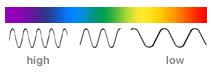
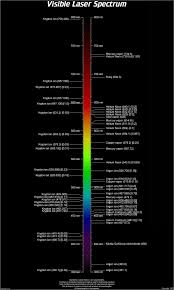
    I came across a website that states that instead of having the red at the top, the red is at the bottom and the violet is at the top. This pictures shows how.


    But in any case, the same website also states that the wavelength and frequency of light we see, also influences the colour we see. The seven colours of the spectrum all have varying wavelengths and frequencies. Red is at the lower end of the spectrum and has a higher wavelength but lower frequency to that of Violet. Whereas Violet, located at the top end of the spectrum, has a lower wavelength and higher frequency.


    Frequency
    The frequency of a wave is determined by the number of complete waves, or wavelengths, that pass a given point each second.


    However, another websites says that "Red light has the longest wavelength in the visible spectrum and therefore reflects the least. It is found at the top of the visible spectrum. Violet light has the shortest wavelength in the visible spectrum and therefore reflects the most. It is seen at the bottom of the spectrum." So Basically, it is because of the length of the wavelength in this website, and both the length of the wavelength and frequency in the first website, that explains why the red is at the top and violet is at the bottom, vice versa.

    And, another website also stated that red has the longest rays and in this case, violet has the shortest rays, so tah-dahs!

    Hope it is not confusing.

    Friday, January 8, 2010

    glycerin + test tube = disappear

    Hello!

    So, Mr Lim showed us that experiment and here am I, explaining why it happens and hoping that it is correct.
    I guess I don't need to explain the experiment, so people, base it on your memory!
    Haha.

    Anyway, firstly, before we proceed, this is what glycerin is.

    Glycerin:
    - Attracts moisture to your skin.
    - It is a natural by-product of the soapmaking process and while commercial manufacturers remove the glycerin for use in their more profitable lotions and creams, handcrafted soap retains glycerin in each and every bar.
    - Glycerin is a neutral, sweet-tasting, colorless, thick liquid which freezes to a gummy paste and which has a high boiling point.
    - Glycerin can be dissolved into water or alcohol, but not oils.
    - Many things will dissolve into glycerin easier than they do into water or alcohol. So it is a good solvent.
    - It is also highly "hygroscopic" which means that it absorbs water from the air.
    - It softens the skin

    Oh, and I found a video of the experiment, hope you enjoy it!


    Explanation:
    What happens is that the glycerin and the bottles have the same refraction index/optical density. Because the light that is going through the glycerin and the bottles is just as easy in both, your eye can't see any different between them. Normally you would see the bottle by the shape in water. But you can't here, that's why it looks like it disappear! Still you can see the glass bottle in the drinking glass. There is a narrow gap between the tow, clearly visible. If it was water, the gap would be much wider and the bottle easier to spot.

    OR

    Light breaks through glass at the same angle as it does in glycerin.

    Tuesday, January 5, 2010

    gloves, the ultimate no censor item

    Hello people!
    Stella is back again for more science, and how are you people doing?
    As you can see, I have relinked, so, please relink me!
    Just some "important" announcements to make (above).
    Anyway, as you people all know, we have 2 new questions on the waiting list (finally), and here is the answer.


    Q1: Why can't the lift activate when we use gloves to touch the touch-screen panel and those normal button?


    Wows, this is one such difficult question to answer. All I got from searching the web is jokes, escape games formula, and nothing about what I want to search about. Give me a moment to find it. Frankly speaking, I think I have experienced this before and never wondered why this would happen. Since I still got the same results as just now, I shall tell all of you what I think. I think that it is because of the pressure produced from our pressing. You see, the gloves are quite thick (you need to keep your fingers and hand arm, isn't that what it is supposed to do?) and as we exert the pressure, the pressure is "spreaded" around the many layers of fibres that make up the material of the gloves and thus, the end amount of pressure that is applyed to the button (please be mindful that I am talking about those normal kinds of button that we press) is so little that is just isn't enough to be the exact amount of pressure needed to push the button.


    Can you imagine the buttons being so loose? Let's count how many trips the lifts need to travel up and down. As for the touch screen panel, I seriously am clueless about how it works. I guess it works a little like how the button works. The pressure applied on the panel is too little as compared to a person pressing the panel without any gloves. So, that's it for this question. I seriously have no idea if it is correct. It is just my assumption. Correct me if I am wrong, I am open to correct, but not too harsh a critism.


    Just imagine it pressing a lift button. Sorry, I can't photoshop it. :(


    Q2: Why ice sticks to your hand/finger when it is just taken out of the freezer?


    It is basically due to some simple processes that we have learnt before, but never thought that it can actually be found in simple things like this. When ice is taken from the freezer, it is about -15 degrees C. The moment it comes in contact with a moist surface, like your finger or tongue, the water that had already melted due to the temperature change, instantly becomes frozen to the surface of the ice. This effect causes the ice to feel, "sticky." Once the ice warms up to 0 degrees C, it is no longer sticky since the surface is starting to melt, leaving a layer of liquid between your finger and the ice.


    See, it really is made up of simple processes. It is just that... Anyway, now that you know, I hope it enlightens your questions, if you ever had taught of this question.


    Monday, March 2, 2009

    temperature vs heat

    It is just a recap about it in case you don't remember-the difference...maybe.

    :)just to let you know more in a cute sort of way.

    THERMAL PHYSICS

    It is stated from a source that thermal physics is like an 'umbrella' for covering 3 other subjects, and the 3 topics are thermodynamics, statistical mechanics, and kinetic theory, and soooo, how does thermal physics is in relation to heat and temperature ?
    Other than heat and temperature-which is in relation to heat related subjects ,what other heat relation subjects are there?
    These are some questions I don't know yet as it sound too profound or maybe i haven't learnt anything about it yet.

    Saturday, February 28, 2009

    something to do with density

    I'm not sure whether it is related to density but i found it rather interesting to watch.

    The gas is called sulfur hexafluoride and it is denser than the surrounding air.

    Hope you like it.>_<

    center of gravity in pendulum bob

    Well, for this question,i did some research but it was futile in the end but i got a rough idea where the gravity is through the pictures i came across.The gravity in the pendulum is located in the middle of the bob. The reason should be that if the gravity is located in the middle of the bob, there would be equal amount of gravitational force acting on it.

    As you can see from this animation, the velocity [V] and the acceleration vectors [A] is all acting on the middle of the pendulum.So as to conclude, the location of the gravity of the pendulum is in the middle of the bob.

    Another question that was asked was where is the center of gravity when the plasticine is placed on top of it or wrapped around it.The center of gravity in this case is still the same as the pendulum did not changed but only one variable is added which is the plasticine.The center of gravity would still be the same apart from the amount of gravity as it would be heavier and thus, maybe more gravity acting/applied on it.

    Thursday, February 19, 2009

    Archimedes of Syracuse


    Full name : Archimedes of Syracuse

    Birth : c. 287BC

    Death : c. 212 BC

    Birth and death place : Syracuse, Sicily, Magna Graecia

    Main Interest : mathematics, physic, engineering, astronomy, invention

    WHAT HE FOUND OUT:

    1.The Archimedes Screw. Archimedes had invented / found out the screw which is normally used to transfer water.

    2. The claw of Archimede

    3.The Archimedes Heat Ray

    4.Levers

    5. Improving the power and accuracy of a caltapult

    6.Used the method of exhaustion to find out the approximate value of TT

    *ARCHIMEDES THE FOUNDER OF MANY THINGS*


    this is one other thing he found out but i don't know what it is called.

    GOLD or PLATINUM which is denser?


    Today in school, Mr Lim thinks that GOLD is the densest of all but in the table in our school's textbooks states that platinum is denser than gold but he still thinks that gold is still denser.After much research, I still found out that platinum is heavier than gold and the heavier it is, the denser it would be. So what exactly is the answer-which is denser? Platinum or gold?

    Platinum is usually 24 karat, which is 100% gold while Gold is only 18 karat, which is 75% gold and that proves that platinum is truly heavier than gold. It is also stated that platinum is an extremely rare metal which is 60% heavier than gold.

    So..I assume that Mr Lim is wrong in the sense that saying gold is denser than platinum.
    No worries! d:) everybody makes MISTAKES!

    References:
    http://www.firenzejewels.com/white-gold-vs-platinum.html